Meal Frequency Effects on Cortisol and Insulin Dynamics
Exploring research findings on meal timing and eating frequency and their effects on cortisol and insulin hormone patterns
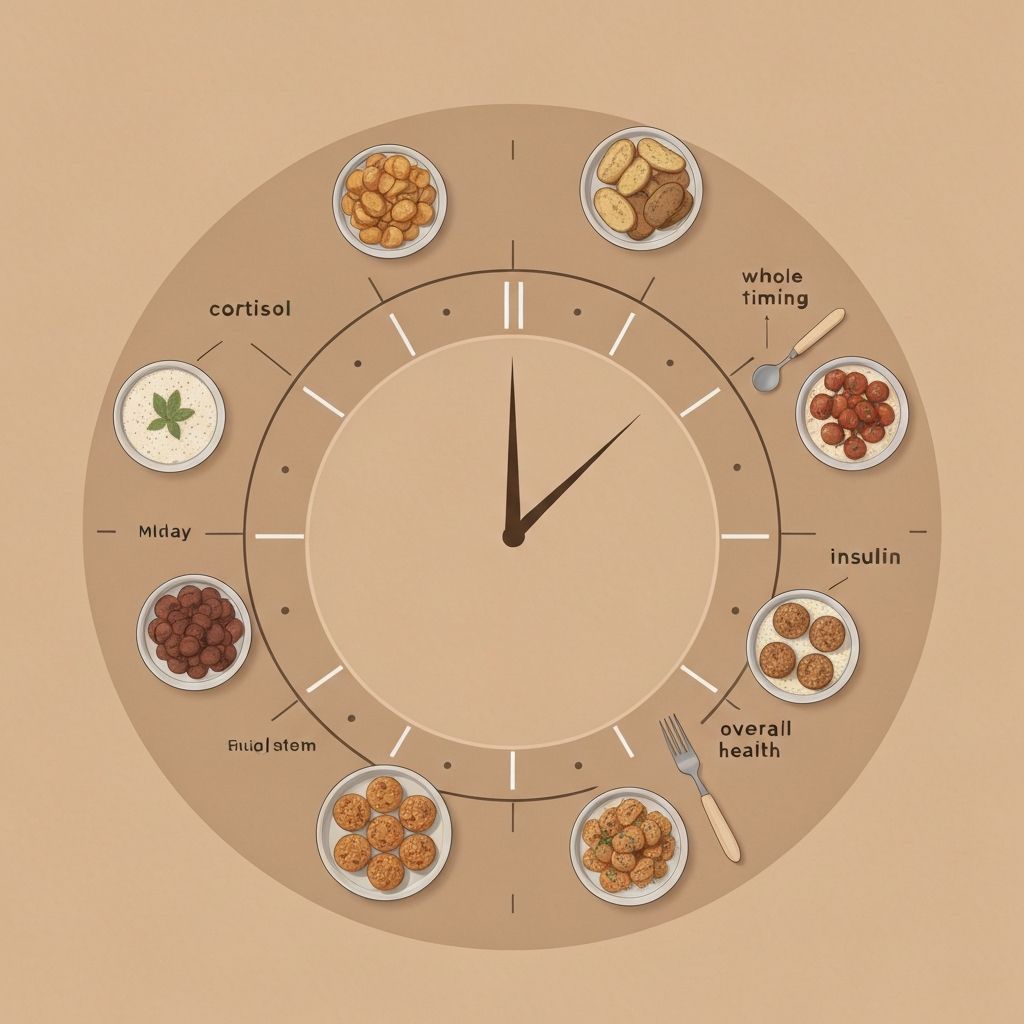
Circadian Rhythms in Cortisol and Metabolic Hormones
Cortisol exhibits a robust circadian rhythm, with peak levels occurring in the early morning (around wake time) and nadirs in the late evening, supporting the sleep-wake cycle and mobilizing metabolic substrates for the day ahead. This endogenous rhythm is entrained by light exposure, physical activity timing, and meal timing patterns. Disruption of normal cortisol rhythmicity—characterized by flattened or inverted patterns—is associated with metabolic dysfunction, sleep disturbances, and altered insulin sensitivity.
Insulin secretion also shows circadian variation, with greater insulin sensitivity in the morning and reduced sensitivity in the evening in most individuals. Meal timing and macronutrient composition influence both the immediate postprandial hormone responses and the longer-term entrainment of circadian hormonal patterns.
Postprandial Insulin Responses and Meal Composition
The consumption of food—particularly carbohydrates—stimulates insulin secretion in a glucose-dependent manner. Meal composition, including the proportion of carbohydrates, protein, and fat, and the glycemic index and glycemic load of carbohydrate sources, influence the magnitude and duration of the postprandial insulin response. Higher fiber intake with carbohydrates blunts postprandial glucose and insulin peaks, supporting more stable metabolic hormone patterns throughout the day.
Protein consumption stimulates the secretion of glucagon and incretins (GLP-1 and GIP), hormones that modulate insulin secretion and glucose homeostasis. The timing and composition of meals thus influence not only immediate metabolic hormone patterns but also longer-term metabolic adaptation and insulin sensitivity.
Intermittent Fasting and Metabolic Hormone Responses
Intermittent fasting protocols—including time-restricted eating, alternate-day fasting, and 5:2 approaches (eating normally 5 days, restricted on 2 days)—create periods of extended fasting interspersed with eating windows. Controlled studies examining these protocols document several metabolic hormone effects:
Fasting periods allow insulin levels to decline and increase insulin sensitivity. Glucagon and growth hormone rise during fasting, mobilizing metabolic substrates. Cortisol shows variable responses depending on fasting duration and individual factors; acute fasting may slightly elevate cortisol in response to metabolic stress, while chronic fasting protocols often show stabilization of cortisol patterns. Leptin levels decline with energy restriction, which may suppress reproductive hormones if energy deficit is prolonged or severe.
Individual responses to intermittent fasting vary substantially. Some individuals demonstrate improved metabolic health, insulin sensitivity, and body composition changes with intermittent fasting, while others experience increased hunger, fatigue, or hormonal disruptions. Factors affecting individual responses include baseline metabolic health, physical activity level, sleep quality, stress levels, and sex hormones.
Meal Frequency and Metabolic Stability
Traditional nutrition guidance has often recommended frequent small meals to maintain metabolic rate and glucose stability. However, research comparing meal frequency effects shows that meal frequency itself has modest effects on metabolic rate and energy expenditure. More important factors are total caloric intake, macronutrient composition, and meal timing relative to circadian rhythms and activity patterns.
Some individuals report greater satiety and more stable energy and mood with frequent small meals, while others find fewer, larger meals more sustainable and satisfying. Cortisol and insulin patterns appear more influenced by meal composition and timing relative to circadian rhythms than by the number of meals consumed, assuming total intake is constant.
Time-Restricted Eating and Circadian Entrainment
Restricting the eating window to earlier hours of the day (e.g., eating between 7 AM and 3 PM) aligns feeding with the period of higher circadian insulin sensitivity and cortisol decline, potentially supporting more favorable metabolic patterns. Conversely, late evening and night-time eating occurs during periods of lower insulin sensitivity and cortisol nadirs, potentially promoting less optimal metabolic responses.
Preliminary research suggests that earlier time-restricted eating may support improved glucose control and metabolic health compared to late-window eating, though long-term effects and individual variability remain incompletely understood. Individual chronotypes (natural sleep-wake preferences) may influence the optimal eating window for different individuals.
Individual Variability and Contextual Factors
Individual metabolic responses to meal timing and frequency are influenced by:
- Genetics (e.g., circadian clock gene variants affecting entrainment)
- Baseline insulin sensitivity and metabolic health status
- Physical activity timing and intensity
- Sleep quality and chronotype (morning vs. evening preference)
- Stress levels and cortisol regulation
- Age and sex (women's hormonal cycles may affect meal timing responsiveness)
- Overall nutritional status and micronutrient adequacy
The absence of one-size-fits-all meal timing and frequency recommendations reflects the complexity of individual metabolic regulation and the substantial individual variability in response to different eating patterns.
Educational Context
This article explains the mechanisms and research findings on meal timing and frequency effects on endocrine hormones. It does not recommend specific meal timing or fasting protocols for any individual. Personal assessment of metabolic health, activity patterns, and individual preferences should guide any changes in eating patterns, conducted with professional support if needed.